

- Home
- About Us
About Us
- About Go With Khaya
Where adventure meets purpose.
Khaya means “home,” and that is exactly what we aim to create — a home away from home for every volunteer. We offer more than just a placement; we offer the opportunity to become part of a community and something bigger than yourself. From the moment you arrive, our team works to ensure you feel supported, well informed and genuinely welcomed while enjoying a meaningful and unforgettable volunteer experience.
Projects that support real community, education, wildlife and healthcare needs.
Ethical, culturally respectful volunteer experiences that benefit local partners.
On-the-ground staff in every country for guidance, mentorship and safety.

Our Partners








Our Mission
At Go With Khaya, we provide carefully selected volunteer and internship opportunities for international travellers seeking meaningful and affordable experiences without compromising quality or support. Our goal is to introduce participants to a side of Africa beyond traditional tourism — one shaped by dynamic cultures, local communities and extraordinary natural environments.
Through our programs in South Africa, Tanzania and Malawi, participants live and work alongside local partners in ways that benefit both the visitor and the projects involved. We focus on long-term collaboration, ensuring that every placement supports community needs while creating genuine learning experiences. Our approach aims to create a fair and transparent partnership where volunteers, local organisations and communities all benefit sustainably.
Our story began with a simple question: what if travel could be more than just visiting new places? From that idea, Go With Khaya was created to offer meaningful travel experiences built on authentic connection, comfort and responsible impact. We design journeys that are personal, purposeful and memorable, where travellers engage with local communities and environments in a respectful and lasting way. Every experience aims to leave a positive impact — not only on the traveller, but also on the people and projects we support.
Our History
Go With Khaya was founded in 2005 to create meaningful volunteer and internship experiences supported by strong local partnerships. Based in South Africa and working closely with projects in Tanzania and Zanzibar, we focus on responsible placements that benefit both participants and the communities involved.
Unlike large booking platforms, we are locally present and work directly with our partner organisations. This allows us to carefully match volunteers to projects, provide on-the-ground support, and ensure every experience is safe, well organised and genuinely impactful.
Our programs span community development, education, healthcare, conservation and wildlife projects, offering participants an authentic way to live, learn and contribute while experiencing everyday life beyond traditional tourism.
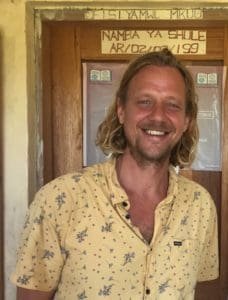
FROM OUR FOUNDER
Martijn Van Der Put
“With more than 20 years of experience, we understand the realities of volunteering abroad and use this expertise to deliver ethical, responsible and carefully supported travel experiences”.
- Client Reviews
What Our Volunteers Say
Real stories from volunteers who joined our volunteer abroad programs and experienced meaningful connections and unforgettable moments.
Netherlands
There wasn’t just one highlight — I truly enjoyed every moment of my stay in South Africa. The project, the work we did, and the weekends away exploring were all amazing. It was an unforgettable experience from start to finish.
Germany
I really valued the opportunity to experience daily life in the townships and gain a deeper understanding of different communities. Spending time with the children, helping out and having fun together was incredibly rewarding. I also really enjoyed visiting Addo, the shared meals and the amazing wildlife.
Spain
Feeding the penguins was definitely the highlight of my experience! I never expected daily routines to be so much fun — all thanks to these adorable penguins. They do bite sometimes, but it’s easy to forgive them. The support from Go With Khaya was excellent, from the booking process through to the service provided while in Port Elizabeth.
France
I spent an amazing month volunteering at SANCCOB Port Elizabeth working with African penguins. I learned so much about conservation and animal care while improving my English every day. The SANCCOB team was incredibly supportive, and I felt warmly welcomed from the start. I quickly connected with the other volunteers, which made the experience even more rewarding. It was truly an unforgettable adventure that I would highly recommend.
Canada
I spent two weeks volunteering at the Vervet Monkey Rescue in June–July 2022, and it was an amazing experience. The people there were incredibly kind, and we had plenty of time working with the monkeys. The daily tasks were simple but truly helpful for their care and wellbeing. It was a once-in-a-lifetime experience, and I will always remember my beautiful monkeys there! 🐒💖🐒💖
Netherlands
I really enjoyed the weekend outings and tours organised with the other volunteers. Everything was well arranged, and it was a great way to explore the area together. I also met so many wonderful people, which made the experience even more special.
FAQ
Is South Africa safe?
South Africa is a developing country, and as such is generally not as safe as the West or other developed nations. There is a huge economic disparity in South African society, combined with a largely undertrained and understaffed police force. This results in high crime rates and social unrest.
Even though the fight against crime has improved over the last few years, you still need to be careful and aware at all times. Go With Khaya will help you to plan your journey to minimise your chances of becoming a victim of crime. So keep calm and come to South Africa! We will make sure you are picked up and guided upon your arrival, get a proper introduction and all the advice you might need for travel, accommodation and sightseeing.
You may have seen footage of rioting and looting in downtown Johannesburg or other large cities in the media. This is NOT representative of the whole of South Africa. Khaya works with volunteer projects in either rural settings or in city areas that are much safer than Johannesburg.
The FIFA World Cup 2010 showed the world that the picture the media shows is very different to reality. Most of the country is peaceful and friendly.
However, you should be aware of your surroundings and be cautious; like you would be in Barcelona or New York! Your ‘radar’ should be fully operational at all times. Here is some advice:
- Travel from A to B without detours and plan your route beforehand.
- Don’t travel at night.
- Don’t hitchhike.
- Don’t look like a tourist – so no cameras around your neck, silly hats and backpacks on your belly.
- You don’t need to stop and chat to anyone who demands your attention – whether they are store or restaurant owners, street vendors, beggars, or simply passers-by.
- Be aware of who is walking near you at all times. If you feel nervous, simply move aside and let people walk past you, or cross the street.
- Walk quickly but not in a ‘panicky’ fashion, behave confidently and know where you are going.
We will help you as much as we can and don’t forget you are not the first traveller to South Africa. Millions of people have travelled here without getting mugged and robbed. Be aware and you will stay safe and enjoy your time in this amazing country.
Is there a dress code at my volunteer placement?
Mainstream South African society could be considered conservative, partially due to the many Dutch and English influences from centuries past. All children wear school uniforms to school, and people dress relatively formally for work or even when going out. So expect to dress as if you are at work in your own country. South Africa has a hot and/or humid climate in many areas, but dress modestly. Brief shorts or tank tops are acceptable on the beach but not really in other areas. For women – topless sunbathing is more-or-less acceptable on some beaches in the tourist areas (e.g. Cape Town), but is not really as common as in Europe! Take your guidelines from the local people around you.
As a volunteer at Khaya, you will represent the project you work for. Find out from your coordinators what the dress code is for your particular job and remember that it is better to overdress than to underdress.
What languages are spoken in SOUTH AFRICA?
South Africa has 11 official languages. The two most widely spoken languages by all people in South Africa are English and Afrikaans. These languages will give you the opportunity to converse with the locals. These are also the languages used by traffic signs and other communal services.
Afrikaans is a language that developed in the 16th and 17th century and derived from Dutch. With the influence of other languages such as Malay and English, Afrikaans became an official language on its own. The black population speaks English and/or Afrikaans beside their mother tongue such as Xhosa or Zulu.
If you are interested, we also offer language courses to volunteers to further develop the possibilities for you to communicate with the locals. It will make quite an impression if you are able to greet people in their own language.
At your volunteer project, there will always be people who speak at least English to translate or communicate for you while volunteering.
What should I do if I have a medical emergency?
Medical assistance in South Africa can be compared to European standards if you can afford it – and as an international visitor, the exchange rate is favourable for you. You will have compulsory medical insurance which will cover any medical needs you might have.
Our coordinators will of course assist you to have access to any information or services needed.
All projects have emergency plans available for volunteers’ medical needs, and you will be assisted to a doctor or hospital as soon as possible.
Usually you have to pay in advance for medical assistance or settle the bill immediately afterwards. You can claim this back from insurance. Do not wait until you’re back home again, but send all documents to your family or friends who can submit the claim on your behalf straight away. Make sure you are aware of the procedures and conditions concerning your insurance, should you find yourself in a situation where medical assistance is needed.
Do I need a visa?
When you stay in South Africa for a period of less than 3 months you do NOT have to apply for a visa (depending on the country of origin). You will come to South Africa on a temporary visitor’s permit for 3 months, which you will receive upon arrival at customs. You will have to show the customs authorities a letter from your volunteer project and clearly state that you are here for volunteering. We will make sure you have such a letter from your project.
LONGER THAN 3 MONTHS
If you want to stay longer than 3 months in South Africa for a volunteering experience or a gap year, you will have to apply for your visa in your country of origin. In general, you will only be given such a visa if you can present a letter in which it clearly states you’ll be working as a volunteer and do not receive any compensation. Khaya will provide this letter for you to use for such an application.
What vaccinations do I need for the area?
South Africa is a very big country with a diversity of climates and circumstances. There are various diseases and illnesses present that are no longer common in Europe. Check with your doctor to make sure you have the right vaccinations for volunteering at a specific volunteer project and make sure you have received all necessary shots before you leave.
THE ADVICE AT THE MOMENT IS TO GET VACCINATIONS FOR:
- DTP
- Hepatitis A and B
- Tuberculosis
- Rabies (working with wildlife and in rural areas)\
The costs of these vaccinations are, in many cases, covered by your medical insurance. Please check so you can claim back these expenses.
MALARIA
Protection against mosquitoes is always important. The Eastern Cape, where Khaya is based, is malaria-free, so if you are not going to travel outside the province, do not worry about any anti-malaria medication.
MALARIA AREAS
- Kwazulu-Natal: from October until May
- Kruger Park: the whole year round
Please be aware that we are not doctors and are therefore are not able to give any medical advice. The abovementioned comments are general recommendations. Visit your doctor or physician for professional personal advice.
Don’t forget to practice good hygiene at all times to minimise the risk of infection, and make sure if the tap water is drinkable in your area. Also be aware that bodies of water may be contaminated by parasites – check with your coordinators before swimming.
Our coordinators will of course assist you to have access to any information or services needed.
All projects have emergency plans available for volunteers’ medical needs, and you will be assisted to a doctor or hospital as soon as possible.
Usually you have to pay in advance for medical assistance or settle the bill immediately afterwards. You can claim this back from insurance. Do not wait until you’re back home again, but send all documents to your family or friends who can submit the claim on your behalf straight away. Make sure you are aware of the procedures and conditions concerning your insurance, should you find yourself in a situation where medical assistance is needed.